
Have you ever been driving on the George Bush Turnpike or I-35 in McKinney and suddenly heard a high-pitched squealing sound when you pressed the brakes? Did you notice a strange vibration in the pedal? That feeling of uncertainty—the “what was that?” moment—is something every driver experiences. It’s a troubling reminder that the most important safety system in your car might need your attention.
Your car’s ability to stop is more critical than anything else. Your brakes are your first line of defense against accidents. Keeping them in good condition is not just about avoiding a noisy ride. It’s about protecting yourself and others on the road.
So, how can you tell if your brakes need help? What’s the difference between a simple brake pad change and a more serious repair? Let’s explore the key dos and don’ts of auto brake maintenance to keep you and your vehicle safe in McKinney, TX.
The Dos – How to Maintain and Understand Your Brakes
Taking care of your brakes is the best way to ensure your safety and avoid costly auto brake repairs in McKinney TX, later.
- DO Listen to Your Car’s Warnings. Your car’s brake system gives you plenty of notice before it fails. Pay attention to these warning signs:
- Squealing or Squeaking: This is often the first sign that your brake pads are worn out. Many pads have a small metal indicator that rubs against the rotor when they get too thin, making this high-pitched sound.
- Grinding Noise: This is a more serious alert. A grinding sound usually means the brake pads are completely worn down, and you’re experiencing metal-on-metal contact. Ignoring this can cause expensive damage to your rotors and calipers.
- Vibrations or Pulsations: If you feel shaking in the steering wheel or brake pedal when you stop, it often indicates warped brake rotors. This occurs when excessive heat causes the rotors to become uneven.
- DO Get Regular Inspections. Ideally, you should have your brakes inspected at least once a year or every 12,000 miles. However, this can vary based on your driving habits. If you frequently drive in heavy traffic in downtown McKinney, your brakes will wear out faster than if you mainly drive on the highway.
- DO Understand the Components. Your car’s braking system includes several key parts, and it’s helpful to know what they are. The most common system today is disc brakes, consisting of:
- Brake Pads: The material that presses against the rotor to slow the car.
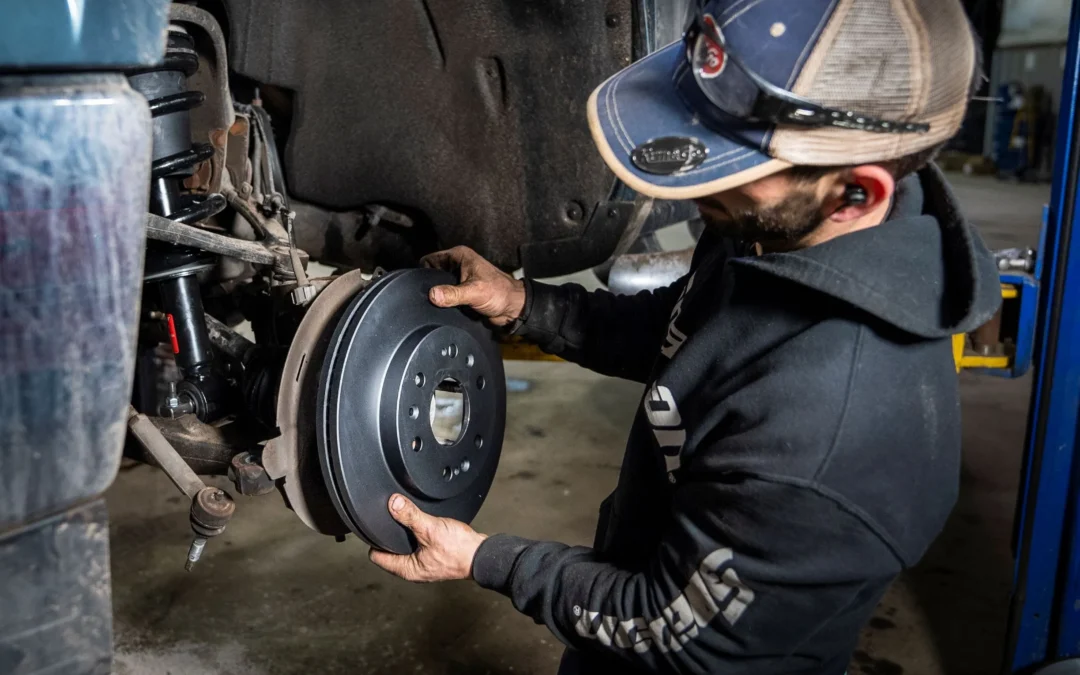
- Rotors: The metal discs attached to your wheels that the pads grip.
- Calipers: The part that holds the brake pads and squeezes them against the rotors.
- Brake Fluid: The hydraulic fluid that transfers the pressure from your brake pedal to the calipers.
- DO Ask Questions. When you take your car for a brake inspection, ask the technician to show you the worn parts. A trustworthy shop will gladly show you the condition of your pads and rotors and explain why a repair is necessary.
The Don’ts – Mistakes to Avoid That Could Jeopardize Your Safety
Avoiding common mistakes is just as crucial as knowing what to do. Steering clear of these issues can help you stay safe.
- DON’T Ignore the Brake Warning Light. Your dashboard lights are there for a reason. If the brake light turns on, it could mean low brake fluid, a problem with the anti-lock braking system (ABS), or something else serious. Don’t wait for a diagnosis. Take your car in right away.
- DON’T Assume a DIY Fix is a Good Idea. While some auto brake repairs in McKinney, TX, can be done at home, auto brake repairs in McKinney, TX, aren’t one of them. A mistake in brake repair can lead to total brake failure, which can be devastating. The brake system is complex and needs specialized tools and knowledge to ensure everything is done safely.
- DON’T Drive on Worn-Out Brakes. It may seem obvious, but many people try to “get a few more weeks” out of their brakes. A study by the National Highway Traffic Safety Administration (NHTSA) found that brake-related issues are responsible for around 22% of all vehicle-related accidents where a vehicle component was the main cause. Driving with worn brakes is a risk you should never take.
- DON’T Forget to Check Your Brake Fluid. Brake fluid absorbs moisture over time. This moisture can cause corrosion in your brake lines and calipers and lower the boiling point, which can lead to brake fade and reduced performance. It’s best to check and flush your brake fluid every two years.
The Brake Lowdown – Q&A
Q: What is the difference between brake pads and brake shoes?
A: Brake pads are used in disc brake systems, found on the front wheels of most modern cars and on all four wheels of many newer vehicles. Brake shoes are part of a drum brake system, a less common setup often found on the rear wheels of older cars and trucks.
Q: How long do brake pads usually last?
A: Brake pads can last anywhere from 25,000 to 70,000 miles. Their lifespan depends on the material (ceramic pads last longer than semi-metallic ones) and your driving habits. City driving with frequent stops will wear them out faster than highway driving.
Q: Why is my brake pedal “spongy”?
A: A spongy or soft brake pedal usually means there is air in your brake lines. Air is compressible, while brake fluid is not, so air decreases the pressure transferred to the calipers and makes the pedal feel soft. This requires a professional brake bleeding service to fix.
Elite Performance Automotive is Your Partner in Auto Care
At Elite Performance Automotive in McKinney, TX, we focus on providing excellent auto brake repairs in McKinney, TX. Our certified technicians have the skills and experience to diagnose and fix any brake issue, from a simple pad replacement to a complete system overhaul.
You can reach us at (214) 491-0348 to schedule an appointment or stop by at 330 Industrial Blvd, Ste 109, McKinney, TX 75069. Let us help you ensure your brakes are in excellent working order.