
“Nothing tests your patience like a Texas summer and a car blowing warm air.”
If you’ve ever stepped into your car on a July afternoon in McKinney and felt the steering wheel melt beneath your palms, you already know – air conditioning isn’t a luxury here, it’s survival. When your AC decides to stop working right when the temperature climbs above 100°F, your daily commute or grocery run quickly becomes a sauna on wheels.
Our technicians don’t just recharge refrigerant and send you on your way. We diagnose, repair, and restore every component of your AC system to make sure you have long-term performance, even in the harshest Texas heat.
Let’s now understand why AC systems fail, what the signs mean, and how professional servicing can keep your cabin cool while retaining fuel economy and keeping your sanity intact.
How a Car AC System Actually Works — the Cold Truth in Simple Words
The air conditioning in your car is a type of closed-loop system that moves refrigerant throughout phases-compression, cooling, expansion, and evaporation remove heat from inside your cabin.
The major components include:
- Compressor – It could be described as the “heart” of your AC system because it compresses and circulates the refrigerant gas through the entire system.
- Condenser – Cools the compressed gas down and converts it into liquid form by giving out heat outside.
- Receiver-Drier or Accumulator – This removes moisture and debris from the refrigerant before it enters the expansion valve.
- Expansion Valve – It controls the amount of refrigerant that enters the evaporator based on the demand for temperature.
- Evaporator Coil – Inside the cabin, it absorbs heat and sends cool, dry air through your vents.
Everything works together to produce clean and cool air at just the right temperature. If one of those components starts to fail, the entire system suffers, and that’s where professional car AC repair services in McKinney, TX, make all the difference.
Common Causes of AC Failure-and What They Really Mean
Your AC system has a lot of moving parts, and every one of them is vital. The most common AC issues don’t always originate from one overt cause-sometimes it’s a chain reaction.
The Usual Suspects Behind Poor Cooling
- Low Refrigerant Levels – These are usually brought on by leaks. Without sufficient refrigerant, the system cannot produce cold air.
- Compressor Failure – The compressor is the workhorse of your AC system. If it seizes up or leaks, nothing else functions.
- Condenser or Cabin Filter – They get clogged by dirt, debris, and bugs, which restrict airflow and make your system work harder.
- Electrical Issues – Chafed or corroded wiring, defective sensors, or relays can cause interruptions in power to key components.
- Damaged Evaporator Coils – Leaks or corrosion prevent efficient heat absorption.
- Worn Belts and Pulleys – They drive the compressor. When they wear out, your AC can lose efficiency or stop altogether.
Many of these problems start small but grow worse with time. That’s why regular car AC repair services in McKinney, TX, include not only refilling refrigerant but also inspecting every major component to identify future issues before they strike.
DIY vs. Professional AC Repair — Why “Quick Fix” Kits Really Do Not Fix Anything
Walk into any auto parts store, and you’ll find DIY recharge kits promising to “restore cold air in minutes.” But here’s the problem – these temporary fixes often make the real issue worse.
The Risks in DIY AC Recharges
- Overcharging the system – Too much refrigerant can damage compressors and seals.
- Masking Leaks – Because adding refrigerant without repairing leaks simply delays failure.
- Using the Wrong Refrigerant – Newer systems employ specific types like R-1234yf. The implication of using the wrong one is damage.
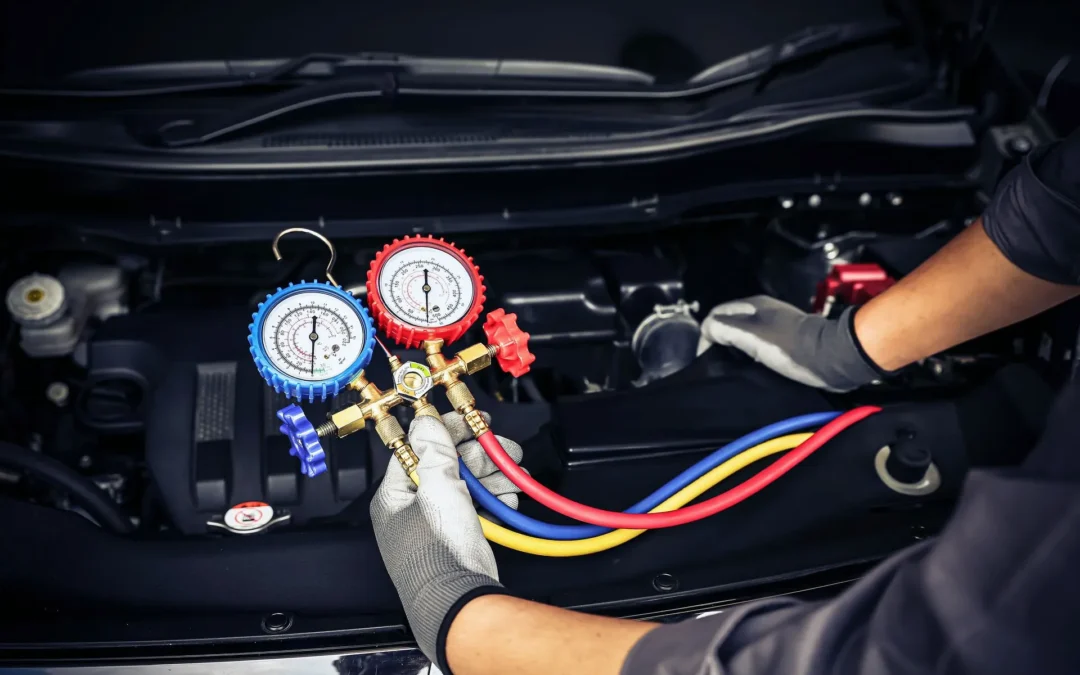
- No Pressure Testing – Without proper tools, you’ll never know if your system has the correct balance.
- Ignoring Contamination – Water or air in the lines creates corrosion and blockages.
In short, what seems to be a $40 solution may develop into a $1,400 bill. When it comes to car AC repair services in McKinney, TX, rely on certified professionals who work with the right tools, refrigerants, and diagnostic equipment.
The Most Asked (and Most Misunderstood) Questions About AC Repair
- How often should I get my car’s AC serviced?
Once a year is excellent, especially before summer. It helps in the early detection of refrigerant leaks and component wear.
- Why does my AC blow cold, then warm, then cold again?
That is normally due to low refrigerant, a clogged condenser, or a failing compressor clutch.
- Does low refrigerant damage my AC system?
Yes. Low refrigerant allows the compressor to overheat and fail prematurely.
- How much time does it take to repair a car’s AC?
Most services take up to 1–2 hours, depending on the repair of leaks or parts replacement.
- What is the average age of a car’s AC system?
With proper care, your AC should last 8–10 years before major repairs are needed.
Because Comfort, Safety, and Cool Should Never Be Optional
At Elite Performance Automotive, we believe your comfort and safety go hand in hand. Our goal isn’t just to fix your air conditioning — it’s to restore your confidence in your car, mile after mile.
Don’t wait until the next heatwave leaves you sweating in traffic. Let the experts at Elite Performance Automotive bring back the chill with reliable car AC repair services in McKinney, TX.
Visit us at 330 Industrial Blvd, Ste 109, McKinney, TX 75069. Call for your appointment today at (214) 856-4509.
Comfort is not an option in McKinney – it’s a necessity.