
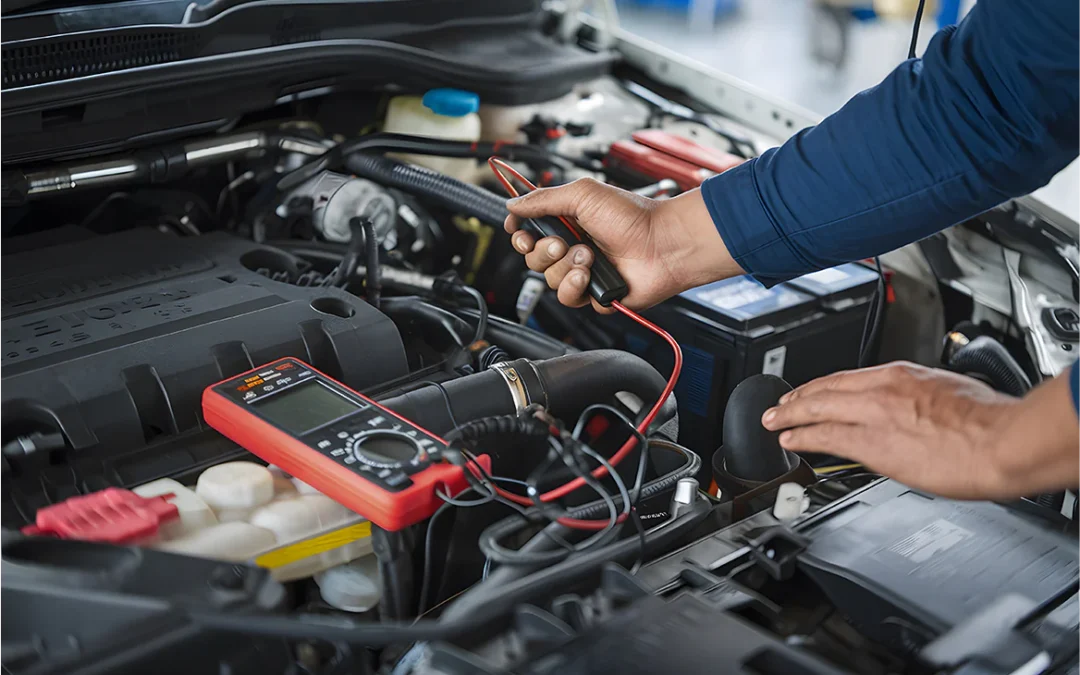
Modern vehicles are smarter than ever, but that intelligence has also made them more complex. When a car struggles with poor fuel efficiency, hesitation, rough idling, stalling, or unexplained warning lights, the problem is rarely simple. Fuel-related issues are often buried deep within systems that rely on sensors, pressure regulation, software logic, and precise timing. That is why finding the best auto repair for fuel diagnostics is not about guesswork or quick fixes. It is about methodical testing, real data, and experienced interpretation.
Elite Performance Automotive approaches fuel diagnostics as a technical discipline, not a trial-and-error process. Instead of replacing parts blindly, their technicians identify why the fuel system is not performing as designed. That difference saves time, money, and prevents repeat failures.
This guide explains how fuel diagnostics actually work, what commonly goes wrong, why many shops misdiagnose fuel issues, and how professional diagnostic procedures separate reliable repairs from temporary fixes.
Why Fuel Diagnostics Are One of the Most Misunderstood Auto Repairs
Fuel systems do far more than deliver gasoline to the engine. They must supply the exact amount of fuel, at the correct pressure, at the right moment, and in the proper spray pattern, all while adjusting to temperature, load, altitude, and driving style.
A failure in any part of this system can cause symptoms that look like other problems. That is why fuel diagnostics are often mistaken for ignition issues, transmission problems, or even electrical failures.
Common reasons fuel diagnostics are misunderstood include:
- Symptoms overlap with other engine problems
- Modern engines rely on dozens of sensors working together
- Software logic can mask mechanical issues
- A single faulty component can trigger multiple fault codes
- Poor diagnostics lead to unnecessary parts replacement
The best auto repair for fuel diagnostics does not start with replacing components. It starts with understanding system behavior.
How Modern Fuel Systems Actually Work
To understand fuel diagnostics, you need to understand how modern fuel systems operate as a whole.
Fuel Delivery
Fuel begins its journey in the tank, where an electric fuel pump draws gasoline through a strainer and sends it forward under pressure. That pressure must remain stable under all driving conditions.
Fuel Pressure Regulation
Pressure regulators maintain precise fuel pressure. Too much pressure leads to rich mixtures and poor fuel economy. Too little pressure causes lean conditions, hesitation, or misfires.
Fuel Injectors
Fuel injectors atomize gasoline into a fine mist. Each injector must deliver the correct volume at the correct time. Even a slight injector imbalance can cause rough running or efficiency loss.
Sensor Input
Sensors such as mass airflow, oxygen, throttle position, coolant temperature, and fuel pressure sensors continuously report data to the engine control module.
ECU Calculation
The engine control unit processes all sensor input to calculate fuel trim adjustments in real time. If a single data point is incorrect, the entire system responds incorrectly.
Fuel diagnostics analyze every stage of this process, not just the visible components.
Signs Your Vehicle Needs Fuel Diagnostics, Not Guesswork
Fuel system problems rarely announce themselves clearly. Many drivers live with symptoms for months because the vehicle still runs, just not well.
Common warning signs include:
- Sudden drop in fuel mileage without driving changes
- Engine hesitation during acceleration
- Rough idle, especially when cold
- Stalling at stoplights or during low-speed driving
- Hard starts or extended cranking
- Check engine light with inconsistent fault codes
- Strong fuel smell without visible leaks
- Surging at highway speeds
The best auto repair for fuel diagnostics treats these symptoms as data points, not assumptions.
Why Replacing Parts Without Diagnostics Makes Problems Worse
One of the most costly mistakes vehicle owners make is replacing unnecessary parts. Fuel system components are not cheap, and replacing the wrong part often introduces new issues.
Examples of poor diagnostic outcomes include:
- Replacing fuel injectors when the issue is pressure regulation
- Installing new sensors without addressing wiring resistance
- Replacing pumps when voltage delivery is the real problem
- Cleaning injectors when mechanical wear is the cause
- Resetting codes without identifying the root failure
Elite Performance Automotive focuses on cause-based repairs, not symptom-based replacements.
What Proper Fuel Diagnostics Actually Involve
Fuel diagnostics are a structured process. Skipping steps leads to inaccurate conclusions.
Step 1: Baseline Data Analysis
Technicians begin by reviewing live engine data. This includes:
- Short-term and long-term fuel trims
- Oxygen sensor response times
- Airflow measurements under load
- Fuel pressure readings
- Engine temperature behavior
These numbers tell a story long before parts are touched.
Step 2: Pressure and Volume Testing
Fuel pressure alone does not tell the full story. Volume delivery matters just as much. A pump may produce pressure but fail under load.
Testing includes:
- Static pressure testing
- Dynamic pressure under acceleration
- Fuel volume delivery per time unit
- Pressure decay after engine shutdown
These tests reveal internal leaks and pump fatigue.
Step 3: Injector Performance Evaluation
Injectors are tested for:
- Spray pattern consistency
- Electrical resistance
- Flow balance between cylinders
- Response timing
Even one injector slightly out of range can disrupt engine balance.
Step 4: Sensor Signal Verification
Technicians verify sensor data integrity rather than trusting fault codes blindly. This includes checking:
- Voltage reference stability
- Signal range accuracy
- Wiring resistance and ground integrity
- Sensor response speed
Many fuel issues originate from data distortion, not component failure.
Step 5: System Interaction Analysis
Fuel systems do not work in isolation. Diagnostics include evaluating how the fuel system interacts with ignition timing, exhaust feedback, and throttle control.
This holistic approach is what sets the best auto repair for fuel diagnostics shop apart from general repair shops.
Common Fuel System Failures That Require Expert Diagnostics
Fuel Pump Degradation
Fuel pumps rarely fail instantly. They weaken over time, producing inconsistent pressure under load.
Clogged or Restricted Fuel Filters
Restricted filters cause lean conditions at higher RPMs while appearing normal at idle.
Failing Pressure Regulators
A faulty regulator can mimic injector or sensor failures.
Injector Imbalance
Uneven injector flow can cause vibration, misfires, and reduced fuel economy.
Sensor Drift
Sensors may operate within acceptable voltage ranges while still reporting inaccurate data.
Evaporative System Issues
Fuel vapor leaks and purge valve failures disrupt air-fuel ratios and trigger misleading fault codes.
Elite Performance Automotive identifies these issues through measurement, not assumptions.
Why Fuel Diagnostics Require Experience, Not Just Equipment
Diagnostic tools are only as effective as the technician interpreting the data. Fuel systems demand pattern recognition and real-world experience.
Experienced technicians know:
- When a normal-looking reading is actually abnormal
- How multiple small faults combine into major symptoms
- Which failures are vehicle-specific and which are systemic
- How software compensations can hide mechanical issues
This level of interpretation is why professional diagnostics matter.
Fuel Diagnostics and Long-Term Vehicle Health
Unresolved fuel system issues affect more than drivability.
Consequences include:
- Premature catalytic converter failure
- Engine oil contamination
- Spark plug fouling
- Cylinder wash and compression loss
- Increased emissions output
- Reduced engine lifespan
Proper diagnostics protect the entire engine system.
Why Elite Performance Automotive Excels at Fuel Diagnostics
Elite Performance Automotive approaches diagnostics with discipline and transparency.
Their process emphasizes:
- Data-driven testing before repairs
- Clear explanation of findings
- Accurate root-cause identification
- Avoidance of unnecessary parts replacement
- Repairs based on confirmed failures
This approach builds trust and delivers consistent results.
Fuel Diagnostics vs. Quick Fixes – The Real Difference
Quick fixes aim to silence symptoms. Diagnostics aim to solve problems.
Quick fixes often involve:
- Clearing codes repeatedly
- Replacing common failure parts
- Temporary drivability improvements
- Recurring warning lights
- Professional fuel diagnostics deliver:
- Stable engine performance
- Restored fuel efficiency
- Reduced long-term repair costs
- Reliable vehicle operation
That difference defines the best auto repair for fuel diagnostics.
How Fuel Diagnostics Save Money Over Time
While diagnostics may seem costly upfront, they prevent:
- Repeat visits for unresolved issues
- Stacked repair costs
- Secondary component damage
- Reduced resale value
- Accurate diagnostics are an investment, not an expense.
FAQs
1. What exactly are fuel diagnostics?
Fuel diagnostics are a detailed testing process that checks how fuel is delivered, measured, and burned in the engine. It involves analyzing fuel pressure, injector performance, sensor data, and engine response to find the root cause of poor performance or fuel economy.
2. How do I know if my car needs fuel diagnostics?
You may need fuel diagnostics if you notice poor gas mileage, rough idling, hesitation when accelerating, hard starts, stalling, or a check engine light that keeps returning even after repairs.
3. Can fuel problems exist even if the car still drives?
Yes. Many fuel system issues develop slowly. Your car may still run, but it may waste fuel, lose power, or place stress on other engine components without obvious failure at first.
4. Why do fuel problems often get misdiagnosed?
Fuel system symptoms often overlap with ignition, sensor, or transmission issues. Without proper testing, shops may replace parts based on assumptions rather than verified data, leading to incorrect repairs.
5. Is a check engine light enough to diagnose fuel problems?
No. A check engine light only signals that something is outside normal range. Accurate fuel diagnostics require live data analysis, pressure testing, and system evaluation beyond reading fault codes.
6. Can bad fuel mileage be caused by fuel system issues?
Absolutely. Faulty injectors, weak fuel pressure, sensor errors, or incorrect air-fuel ratios can all cause excessive fuel consumption without obvious driving problems.
7. Do fuel diagnostics always mean expensive repairs?
Not always. Sometimes the issue is a sensor reading error, a wiring problem, or a restricted component, rather than a major failure. Proper diagnostics help avoid unnecessary and costly part replacements.
8. How long does fuel diagnostics usually take?
Basic fuel diagnostics can often be completed within a few hours, while more complex issues may require additional testing time. The goal is accuracy, not rushing the process.
9. Can driving with fuel system problems damage my engine?
Yes. Long-term fuel issues can lead to engine wear, catalytic converter damage, oil contamination, and reduced engine life if left unaddressed.
10. Why is professional fuel diagnostics better than trial-and-error repairs?
Professional diagnostics focus on identifying the exact cause of the problem through testing and data analysis. This prevents repeat repairs, reduces long-term costs, and restores proper engine performance more reliably.
Final Thoughts – Real Answers Start With Real Diagnostics
Fuel system problems demand precision, patience, and expertise. When a vehicle does not perform as expected, the solution is rarely found in blindly replacing parts. It is found in understanding how the system operates, where it deviates, and why.
Elite Performance Automotive delivers fuel diagnostics that go beyond surface-level testing. Their methodical approach, technical expertise, and commitment to accuracy make them a trusted choice for drivers seeking real answers, not temporary solutions.
If your vehicle struggles with fuel efficiency, performance inconsistencies, or unresolved engine warnings, professional diagnostics are not optional. They are essential.
Choosing the best auto repair for fuel diagnostics means choosing accuracy, reliability, and long-term vehicle health.